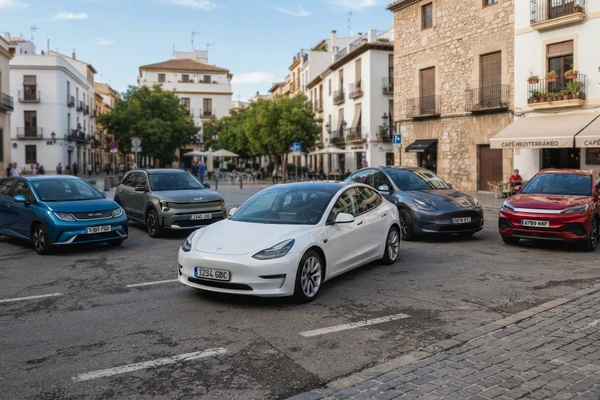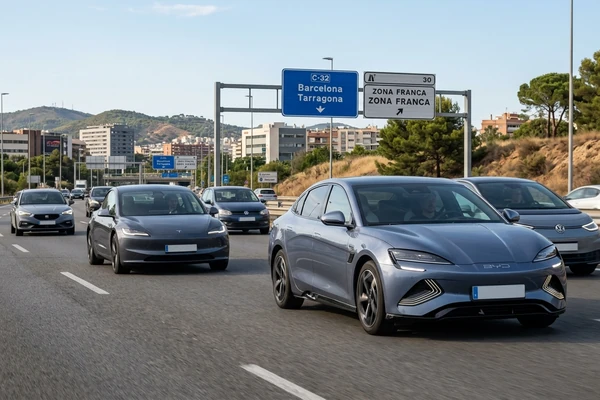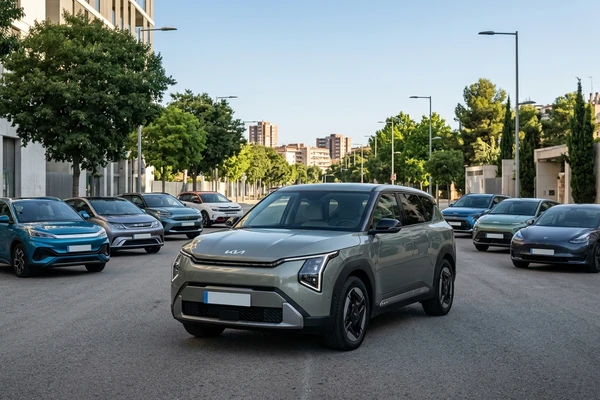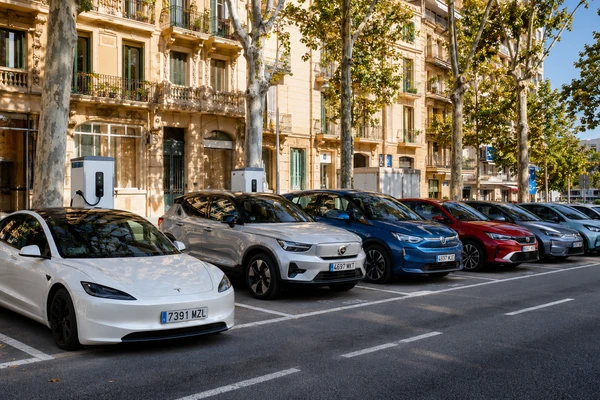
In August 2026, 2,540 new fully electric passenger cars were registered to owners domiciled in the province of Madrid —home to Spain's capital and largest metropolitan area—. That represents 26.9% of the 9,450 registered across the country. Madrid remains, by a wide margin, Spain's largest electric market. And its ranking retains the feature that already set it apart in July: Mercedes-Benz and BMW carry far more weight than in Spain as a whole. Both sit among the top four brands, and five models from the two German brands appear among the twenty best-selling cars, a presence that is not matched at the top of the Spanish ranking.
The Madrid electric market grew 7.7% year on year in August (2,540 versus 2,358). It is a modest advance, well below Spain's 31.7% growth: Madrid's electric market is expanding far more slowly than the country as a whole. This piece zooms in on Madrid; we cover Spain's overall August ranking separately.
In this article 7 sections
- The 20 best-selling electric cars in Madrid in August 2026
- Madrid buys more premium electric than the Spanish average
- The best-selling electric brands in Madrid in August 2026
- Year to date: German premium weighs even more
- The electric car within Madrid's total market
- The ranking changes if we look at private buyers only
- Methodology and data source
01The 20 best-selling electric cars in Madrid in August 2026
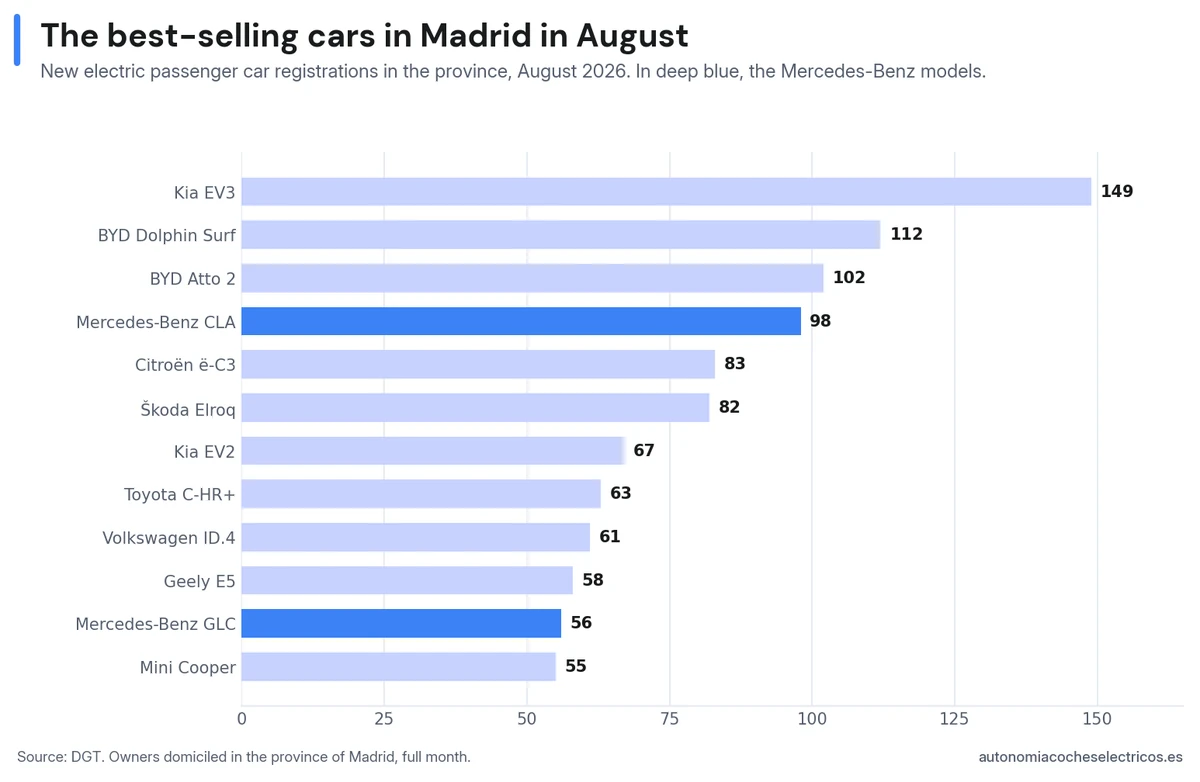
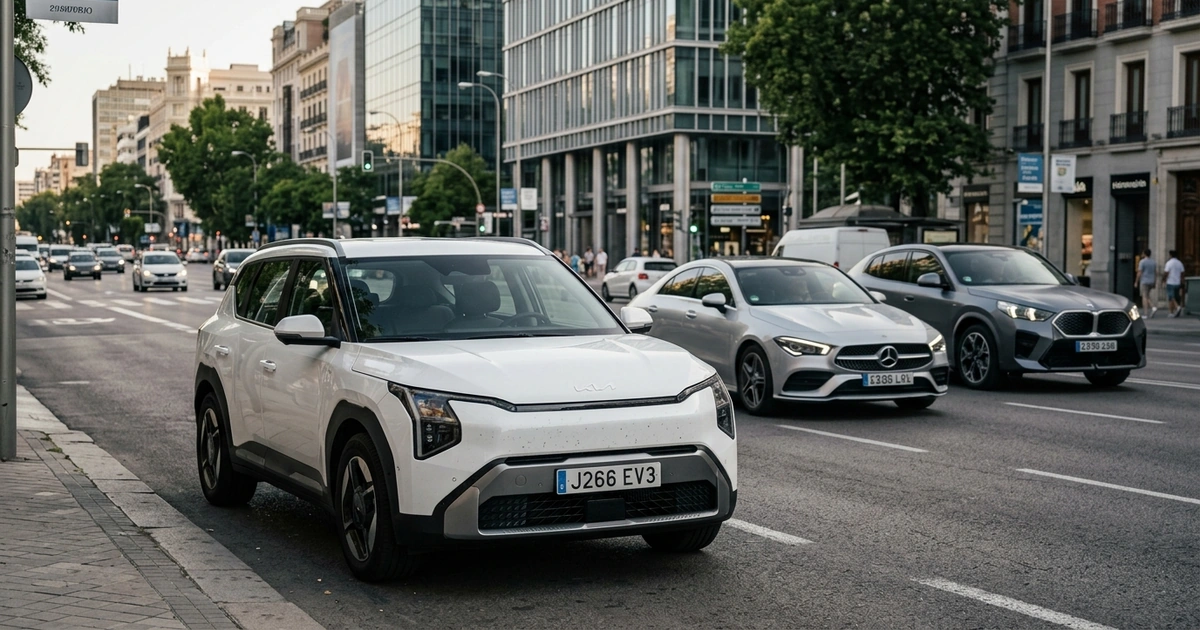
In Madrid, the month opens with the Kia EV3 at 149 units, followed by BYD's two best-sellers: the Dolphin Surf (112) and the Atto 2 (102). Fourth place goes to the Mercedes-Benz CLA (98), Mercedes-Benz's electric sedan, in a position it does not reach in the Spanish ranking. What stands out in Madrid is how the table is distributed: five models from Mercedes-Benz and BMW rank among the top twenty — the CLA, GLC and GLB from Mercedes-Benz, and the iX1 and iX2 from BMW. The Mini Cooper adds a sixth premium model in twelfth place.
02Madrid buys more premium electric than the Spanish average
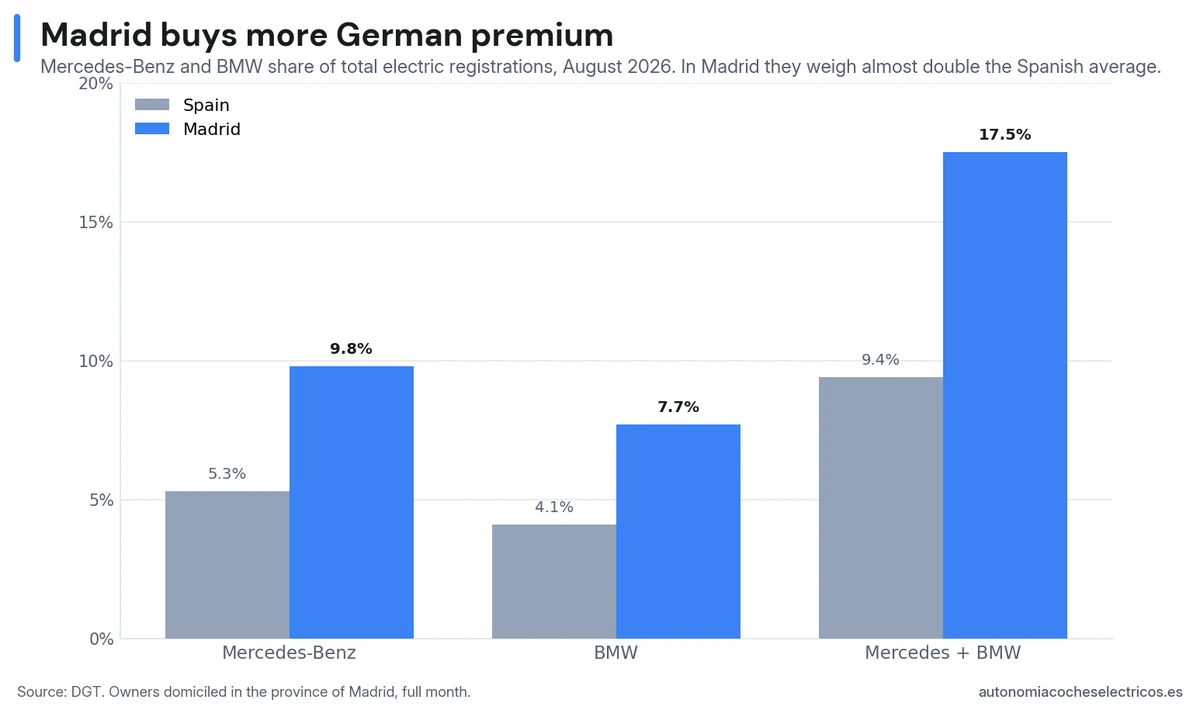
What sets Madrid apart is the weight of the German premium brands. Mercedes-Benz is the province's third-ranked brand with a 9.8% share, compared with 5.3% across Spain. BMW is fourth with 7.7%, against 4.1% across the country. Between them they add up to 17.5% of the Madrid electric market, almost double their weight in the country as a whole.
The data points to why: company registrations. In Madrid, 51.9% of electric registrations are made in the name of companies and other legal entities, compared with almost seven in ten going to private buyers across Spain in August. The premium brands lean heavily on that channel. Even so, BYD remains the leading brand (330, 13.0%), as in most of Spain: premium rises in Madrid but does not unseat the Chinese leader. The group of Chinese-capital brands stays at 27.4% of the Madrid market, more than six points below the Spanish figure of 33.8% for August — the other side of the same bias.
03The best-selling electric brands in Madrid in August 2026
BYD leads in Madrid too, though with a slightly lower share than across Spain. The difference is behind it: Mercedes-Benz and BMW take the third and fourth spots, well above their position across Spain, while Leapmotor —the third-ranked brand nationwide— falls to sixth in Madrid with 115 units.
04Year to date: German premium weighs even more
August is a single month's snapshot; the year-to-date shows the underlying picture better. Between January and August, Madrid owners registered 26,844 new electric passenger cars, 31.5% of every electric car registered in Spain so far this year, the largest territorial share by a wide margin.
And the cumulative figure makes the premium bias even clearer. Year to date, Madrid's second brand is Tesla, despite its sharp summer drop, followed by Mercedes-Benz in third; BMW appears fifth.
Mercedes-Benz and BMW ranking third and fifth year to date, with Tesla in second, underline how much more upmarket Madrid's electric market is than Spain's overall market. August is no mirage: it is one month's version of something that recurs all year.
05The electric car within Madrid's total market
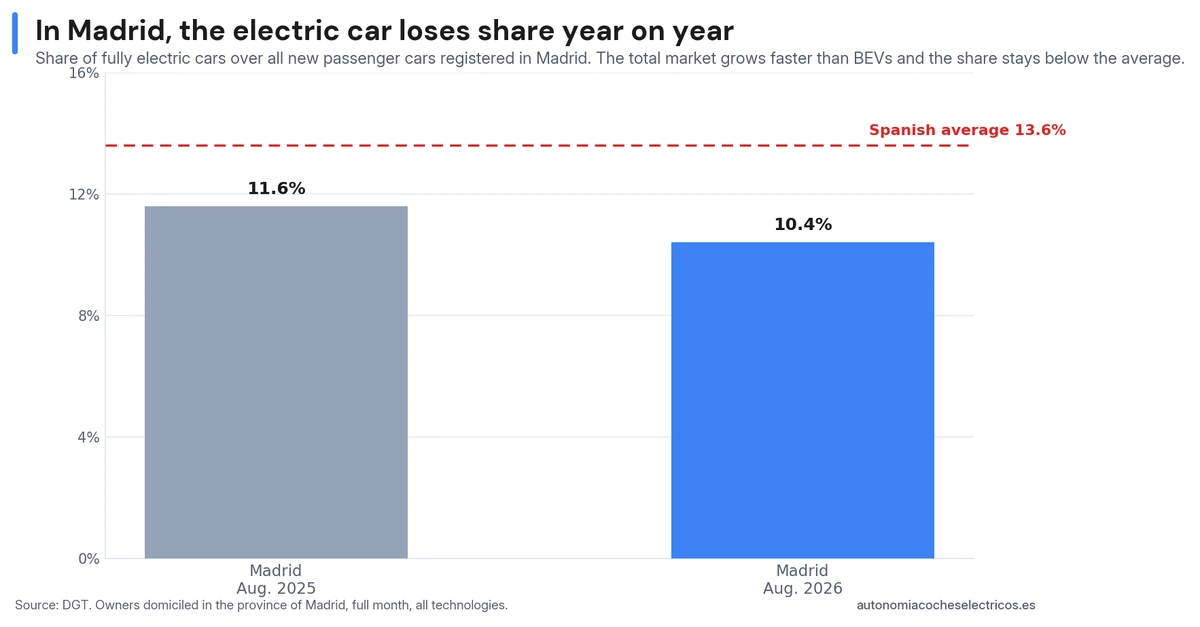
The picture becomes clearer when we put the electric ranking in the context of Madrid's entire new-car market. Madrid registered 24,484 new passenger cars of all technologies in August. Of every 100, just over 10 were fully electric: a 10.4% share, below the 11.6% of August 2025 (2,358 out of 20,280). The total Madrid market grew 20.7% year on year while BEV registrations rose only 7.7%, pushing the BEV share down: in Madrid, the rest of the market —hybrids in particular— is moving faster than the electric car.
That 10.4% carries a caveat for everything else here: Madrid is Spain's largest electric market by volume, but its BEV share —the weight of the electric car over all new cars— sits below the Spanish average, which reached 13.6% in August. The province registers many electric cars in part because its total market is enormous, but BEVs account for a smaller share of new-car registrations there than they do across Spain. Madrid leads in units and trails in proportion.
06The ranking changes if we look at private buyers only
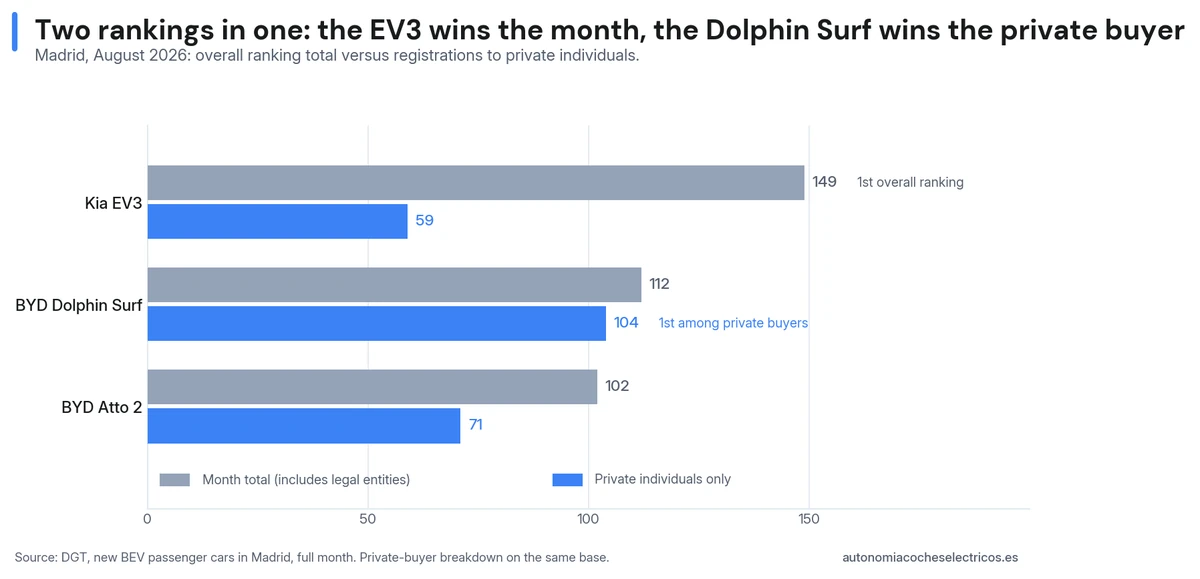
Of the 2,540 registrations, 1,222 (48.1%) go to private individuals and the other 1,318 (51.9%) to legal entities. And when we isolate private buyers, the ranking shifts. The most registered model by private buyers is not the Kia EV3, but the BYD Dolphin Surf (104 units), followed by the Citroën ë-C3 (76) and the BYD Atto 2 (71); the EV3 falls to fourth (59). The Mercedes-Benz and BMW models disappear from the leading group: their volume is heavily concentrated in company and other legal-entity registrations. Madrid's premium bias is largely explained by registrations to companies and other legal entities, rather than by private buyers.
In August, Madrid's electric market repeats its distinctive pattern: high volume, slow growth and a much stronger presence of German premium brands than in Spain as a whole. The comparison with Catalonia reveals the two faces of the Spanish electric map: Madrid leads in units but stays below the average in share; Catalonia registers fewer cars and, even so, the electric car carries more weight there over the total.
07Methodology and data source
The data in this article comes from the official registration database of the Directorate-General for Traffic (DGT), part of Spain's Ministry of the Interior.
The following filters were applied to the raw data:
- Vehicle type: Passenger car. Vans, light commercials, trucks, buses, motorcycles and mixed-use vehicles are excluded.
- Powertrain: Battery electric (BEV). Plug-in hybrids (PHEV), hybrids (HEV) and extended-range electrics (REEV) are excluded.
- New/Used: New vehicle. Second-hand registrations are excluded.
- Territorial scope: province of Madrid, taken as the owner's domicile, not the province where the vehicle is registered administratively. This way the figure reflects where the buyer lives and not where a fleet or rental company registers its head office.
- Chinese block: groups the brands controlled by Chinese business groups (BYD, Leapmotor, Deepal, XPENG, MG, Omoda, Jaecoo, Lynk & Co, Smart, Geely and Denza, among others), regardless of where the vehicle is built. It is therefore not equivalent to "cars made in China." It does not include KGM (Korean) or DS (French).
- Purchase channel: the main ranking includes all registrations (private buyers, companies and rental fleets). The private-buyer breakdown is calculated from the same DGT database, filtering registrations in the name of a private individual.
The figures reflect registrations of new fully electric passenger cars with owners domiciled in the province of Madrid during August 2026, with data closed as of 31 August 2026, and include purchases by private buyers, companies and rental fleets. Comparisons with earlier months and years are recalculated using the same method on the full dataset. Market-share figures against the total passenger-car market come from the same source, covering all powertrain technologies.