
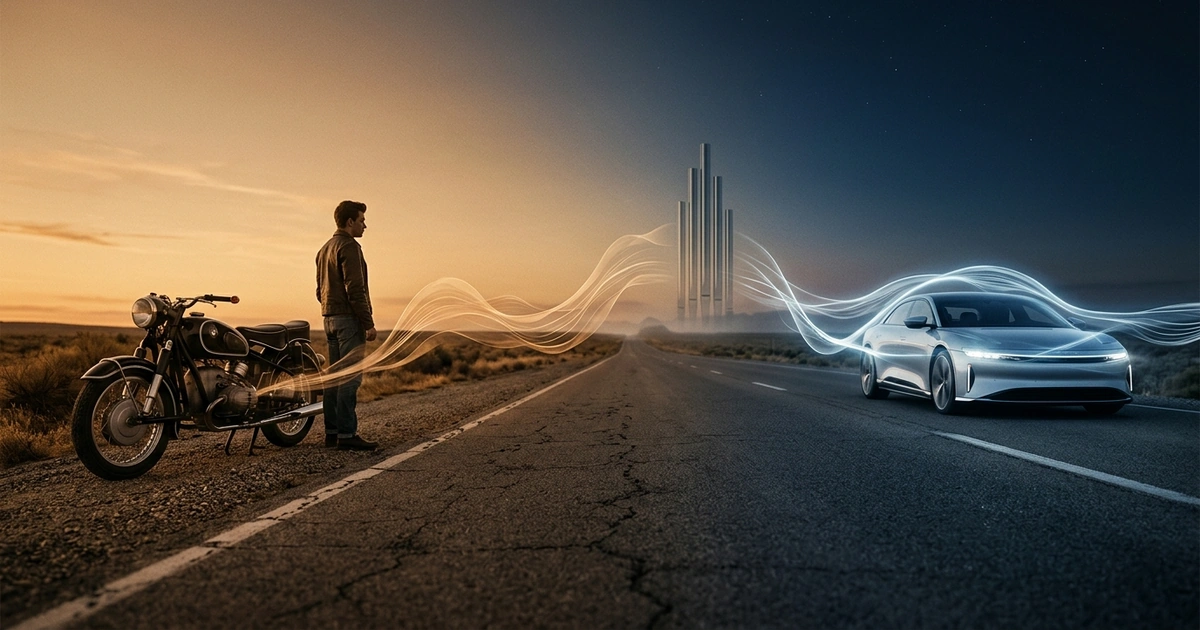
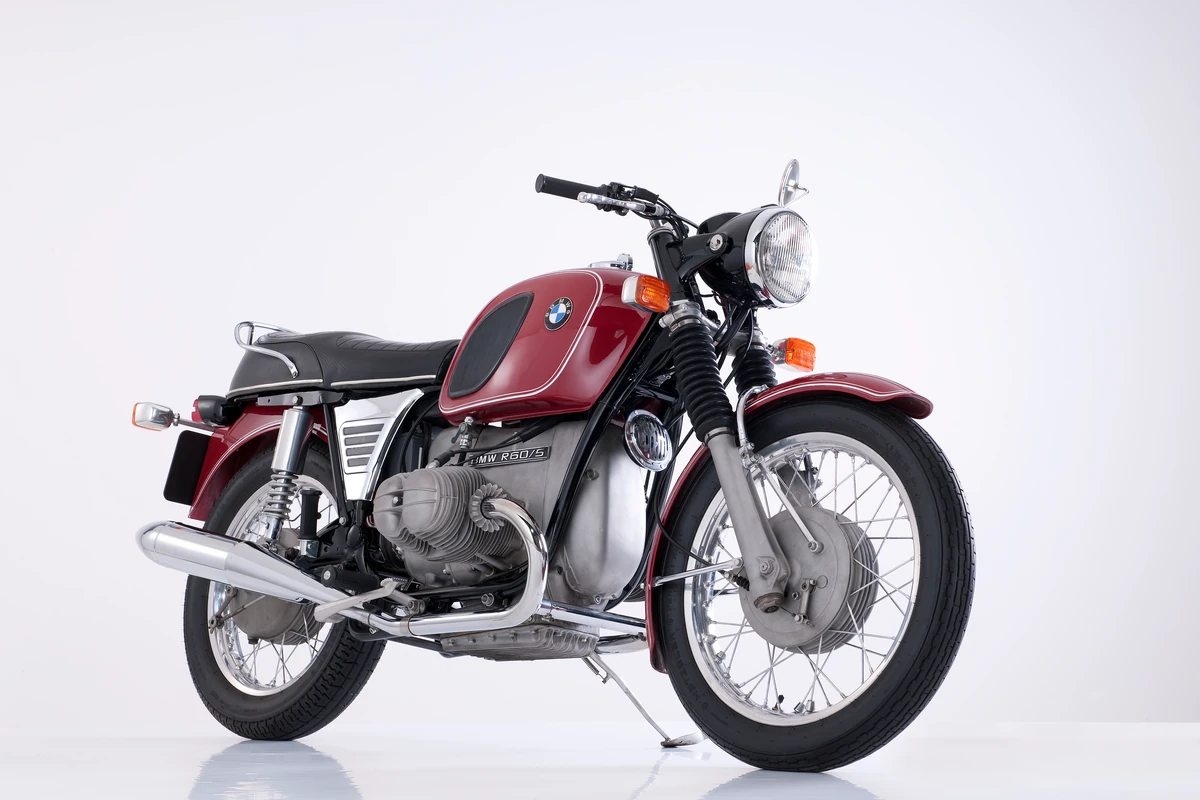
In 1959, a young composer bought a second-hand BMW R69 motorcycle with the 750 dollars he had just won in a competition at the Juilliard School of Music in New York. Over the next two years he made the New York–San Francisco round trip twice, crossing the continent on that German bike. Philip Glass tells the story in his memoir Words Without Music: the journey as a transformative experience, the road as a score, the sound of the engine as company. Twenty-three years later, Glass would compose Koyaanisqatsi, the film that turned sound into the definitive language of machines in motion. BMW would use that very music —"Pruit Igoe", one of the Koyaanisqatsi themes— in one of its most memorable advertising spots.
Six decades after Glass crossed America on his R69, BMW hired Hans Zimmer —the composer who owes the most to Glass in contemporary film— to design the sound of its new electric cars. The circle closed on the same brand. It is no coincidence: it is the story of how the automobile and music have spent decades orbiting each other, and of how the electric car has turned that relationship into something explicit, deliberate and artistic.
The instrument that disappeared
There are Ferrari, Porsche or Bentley drivers who never play music in the car. It is not an oversight: it is a choice. The engine is what they want to hear. A V8 at four thousand revs, a W12 in sustained acceleration, the flat-six of a 911 approaching the red line: these sounds have history, they have character, and for those who know them, they compete with anything that could come out of the speakers. The exhaust was not background noise; it was the lead instrument.
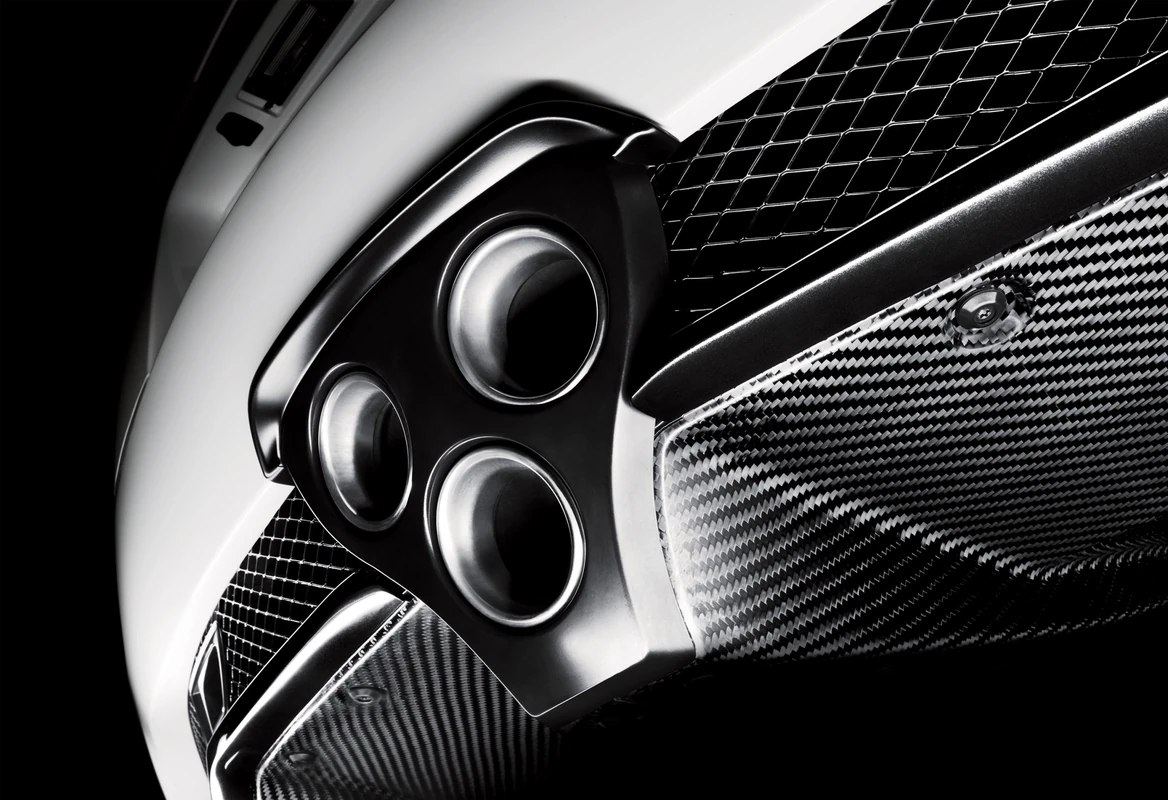
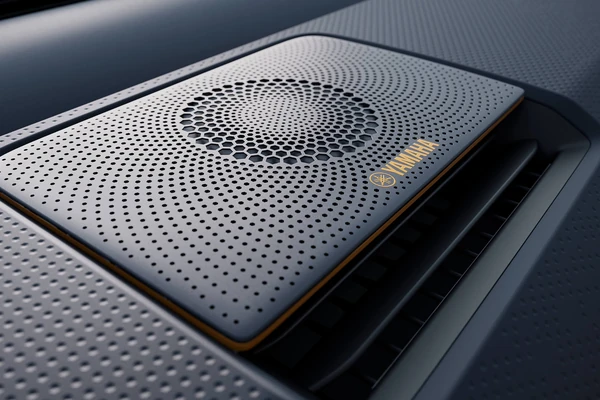
Manufacturers knew this and worked at it. A Ferrari's exhaust manifolds are designed acoustically; engineers sharpen frequencies, amplify harmonics, suppress the tones that sound industrial and reinforce those that sound like a living machine. It is engineering in the service of emotion. The most extreme case of this philosophy has a name of its own: the Lexus LFA, the supercar with a V10 engine that for many produces the finest exhaust sound ever to come out of a production car. Toyota and Yamaha maintain a technical alliance of more than six decades —Yamaha designed the engine of the Toyota 2000GT in the sixties and has signed off on the cylinder-head technology of some of the most legendary Toyota engines—. For the LFA, Toyota turned to Yamaha Corporation —the musical-instruments division, not the motorcycle-engine one— to work the engine bay and the exhaust as if they were the resonating chamber of an instrument: to define which frequencies to amplify, which to suppress, how to make that V10 sound at 9,000 rpm with a tonal clarity that Toyota's own measurement teams could not capture. Not to make it more efficient: to make it sing.
The electric vehicle has eliminated that instrument entirely. It has not toned it down or changed it: it has made it disappear. What remains is an absence that for many drivers is perceived as a loss of emotional connection with the vehicle —the disappearance of the most direct feedback the driver had about what the mechanicals were doing.
The industry's response has been to build a new instrument. Not a substitute for the combustion engine —that would be impossible and probably undesirable— but something native to the BEV: a sonic language designed from scratch for a type of propulsion that had never existed. This is where the composers, the acoustics engineers, the sound labs and, finally, regulation come in. Sound has ceased to be a by-product of the mechanicals and become a design decision made with the same deliberation as the shape of the bodywork or the feel of the steering wheel.
Silence as a decision
The story of combustion-engine sound design was always a story of management: working the sound the mechanicals already produced in order to amplify it, dampen it or give it character according to the segment the vehicle was aimed at. The starting point was constant. What the engineers did with it was variable.
The electric vehicle has changed the equation at its root. With no combustion engine, the sound that for a century defined the experience of driving disappears. What remains is a silence that, depending on how it is managed, can be perceived as sophistication or as emptiness. The brands that have taken the EV seriously have reached the same conclusion: silence is not neutral. It is an opportunity or a problem, and the difference between the two is determined by what you decide to do with it.
That BMW called on Hans Zimmer is not a marketing anecdote: it is the sign that the most ambitious brands have decided the sound of the car is part of the product experience on the same level as the exterior or interior design.
The composers who listened to machines
Before any carmaker thought of hiring a composer to design driving sounds, there already existed a musical tradition that had solved exactly that problem: how to make sound express the experience of movement, speed, technology.

Philip Glass inaugurated it in 1982 with Koyaanisqatsi, the first installment of the Qatsi trilogy —followed by Powaqqatsi (1988) and Naqoyqatsi (2002)—, directed by Godfrey Reggio and produced, among others, by Francis Ford Coppola. The film has no dialogue and no narration: it is images of natural and urban landscapes, of factories, highways and crowds, with Glass's music as the only connecting thread. The creative process was unusual: Glass composed over the footage, Reggio and his editors re-edited the images while listening to the music, and that dialogue was repeated until the fusion was total. Music and images were not produced sequentially — they were co-created. The result is that the sound does not accompany the images: it interprets them. "Pruit Igoe" turns the demolition of a housing block into something close to the sublime.
Reggio's best-known quote about the trilogy defines its scope: "It's not that we use technology — we live technology. Technology has become as ubiquitous as the air we breathe." It is exactly the intuition BMW would need forty years later to justify why the sound of an electric car deserves the same attention as its design: if we live inside technology, we also live inside its sound.
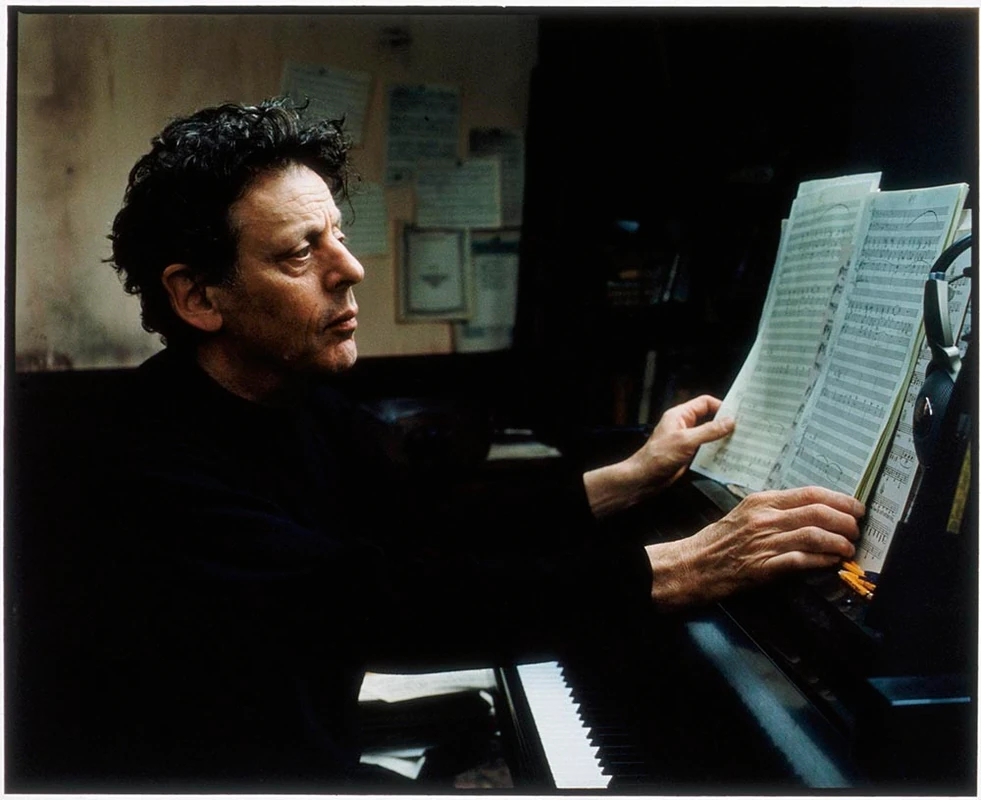
Koyaanisqatsi reached cinemas with the stigma of the alternative: no dialogue, no actors, no conventional narrative, financed with difficulty and distributed irregularly. It was cinema for festivals, for intellectual circles, for those who in 1982 believed technology and nature could be the protagonists of a film without anyone speaking. It was, in the best possible sense, marginal cinema. Forty years later, that same idea —that sound can transform our perception of machines— is the strategic argument of the product departments at BMW, Renault, Mercedes and Porsche. What in 1982 was film-festival philosophy, in 2024 looks a lot like the brief for a team of acoustics engineers —perhaps without a direct, conscious chain of influence, but with a convergence of intuitions too precise to be entirely accidental.
The paradigm shift from the combustion engine to the electric one reinforces that reading. The combustion engine was visible, audible, present: it spilled sound, heat and vibration as constant proof of its existence. The electric motor does not. The machine has become invisible. And when the machine becomes invisible, the sound you give it becomes its only physical presence.
Mike Oldfield had reached a similar conclusion nine years earlier by a different route. Tubular Bells (1973) proved that sound could be a continuous, evolving texture, with no lyrics, no conventional song structure, capable of holding attention for forty-nine minutes. What Oldfield was doing was building soundscapes: the kind of experience a manufacturer needs when designing the sound that will accompany hundreds of hours of driving.
Jean-Michel Jarre completed the triangle in 1976 with Oxygène. Where Glass was minimalist and austere, and Oldfield was organic and progressive, Jarre was synthetic and expansive: long-form electronic landscapes that proved music could evoke space, movement and time without a single note from an acoustic instrument. Oxygène is perhaps the first hugely successful album whose sonic structure has more in common with an EV soundscape than with any radio song.
These three figures built, without intending to, the musical vocabulary the electric-car industry would eventually need. It is no accident that BMW, before hiring Zimmer, had already chosen Glass's music to speak about itself. The brand knew, long before EVs existed, what kind of sound it wanted associated with its image.
Hans Zimmer designs the BMW i4
The connection between Philip Glass and Hans Zimmer is not merely cultural: it is documented. The soundtrack of Interstellar (2014) —the album that placed Zimmer in the conversation about the most ambitious film music of his generation— is an explicit homage to Koyaanisqatsi. The same minimalist philosophy, the same use of the organ to evoke scale and transcendence, the same interest in sound as a physical experience. Critics described it as "half Philip Glass, half Kraftwerk". Zimmer did not hide the influence: Glass is among the composers he cites as a fundamental reference.
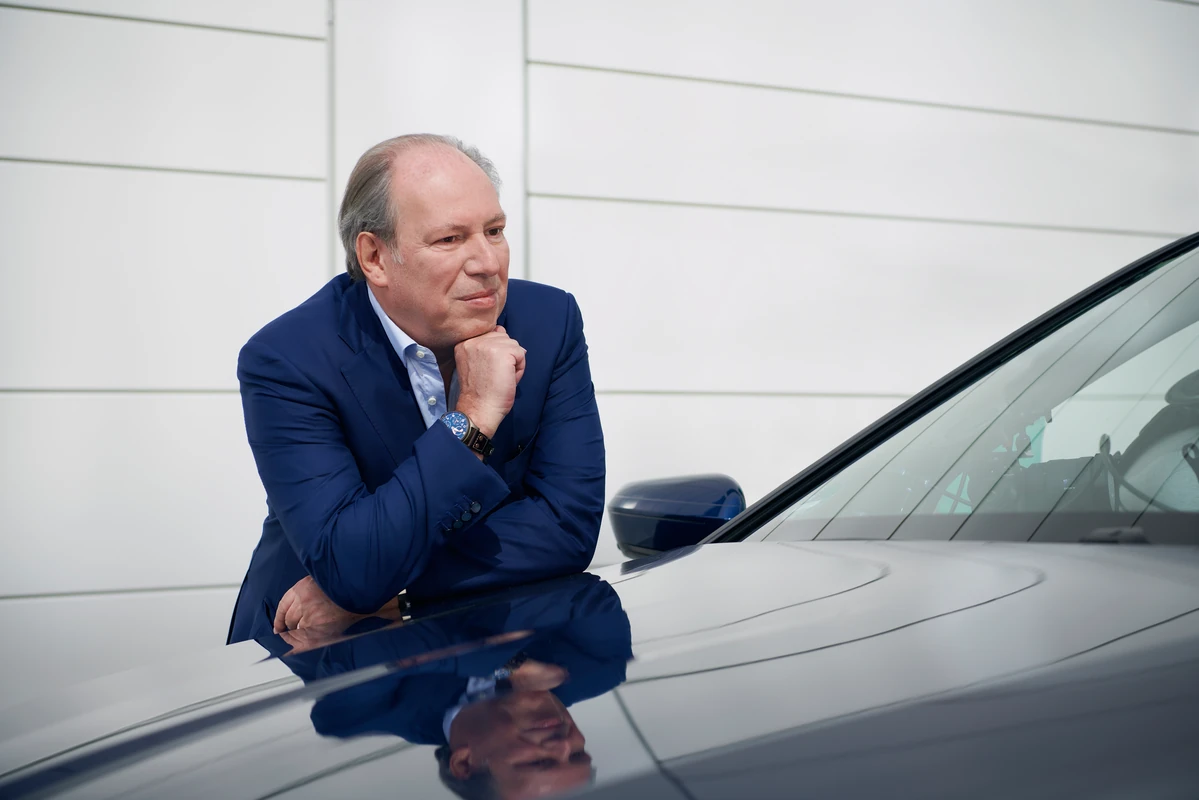
When BMW looked for a composer for its electric models, the choice of Zimmer had a cultural coherence that can hardly be accidental: he was the most documented heir to that same tradition.
The collaboration between Zimmer and BMW began before the launch of the i4. The first result was a start-up sound co-developed with Zimmer for all electrified BMW models, introduced in July 2020. The centerpiece would arrive with the IconicSounds Electric program, developed alongside Renzo Vitale, the BMW Group's Creative Director of Sound: the person responsible internally for the sound of BMW, MINI and Rolls-Royce, and the architect of the collaboration with Zimmer.
The result is driving soundscapes that debuted in 2022 on the BMW i4 —as an option— and on the BMW iX —as standard—, and that later extended to the BMW i7 and to the electric M models with their own differentiation. The sound is not a repeating loop: it responds in real time to every movement of the accelerator, the speed and the selected driving mode.
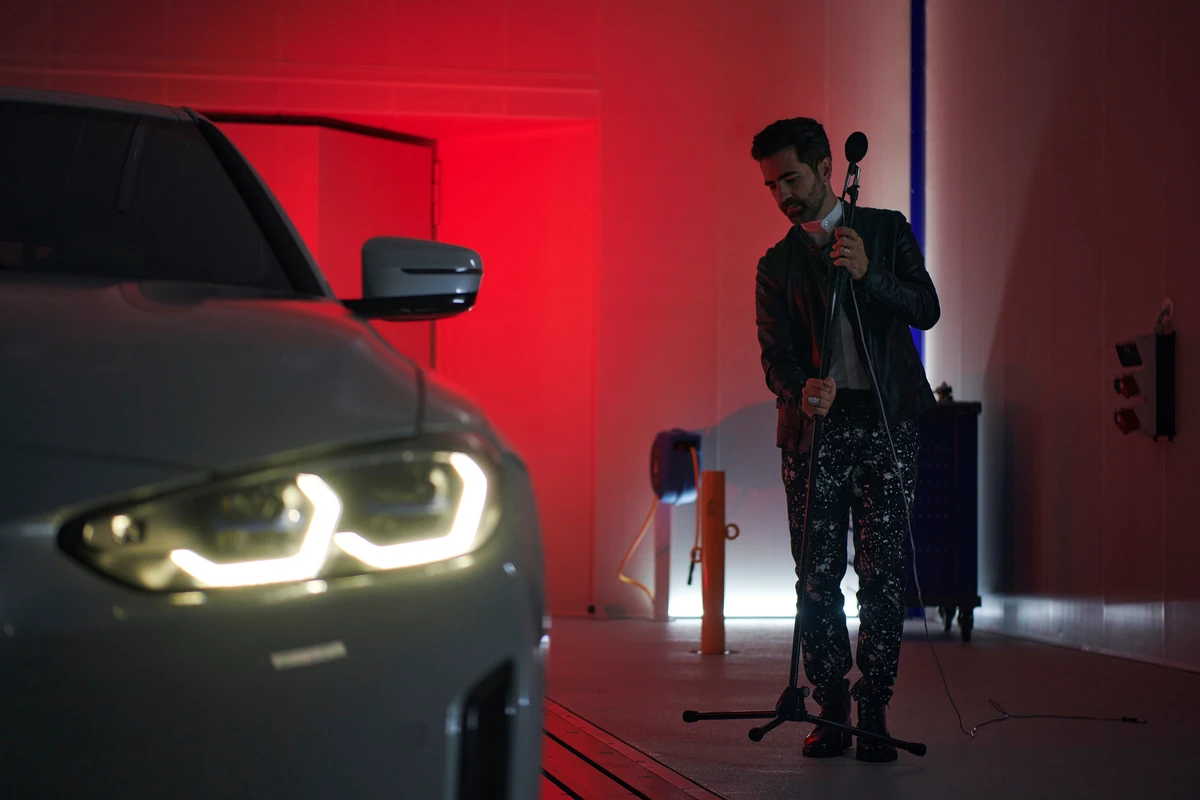
In Personal / Comfort mode —the default— the pattern is spherical and tonal, designed to convey the vehicle's progressive character without imposing a presence. In Sport mode, the modulation becomes extremely dynamic and the feedback on available power is immediate. In the M models, the intensity of the sound rises sharply under acceleration to underline the vehicle's character.
The materials Zimmer and Vitale used to build these soundscapes are unusual: human voices, classical instruments, mechanical sounds, and unconventional combinations that include the sound of a guitar string made to vibrate with a glass cylinder. The stated goal was neither to simulate the combustion engine nor to create a futuristic science-fiction effect: it was to make the electric-driving experience emotionally rich, with a language of its own that owed nothing to the engine the EV had replaced.
One design decision defines the whole system: the interior sound also serves as the basis for the exterior AVAS sound —the signal the car emits to warn pedestrians. What the driver hears and what the pedestrian hears belong to the same sonic universe.
Renault and Jean-Michel Jarre: the parallel bet
In September 2021, at the Munich Motor Show, Jean-Michel Jarre met Luca de Meo, the CEO of Renault Group. What began as a conversation at an event ended in one of the industry's most ambitious collaborations in sound design: Jarre working with Renault's teams and with IRCAM —the Institut de Recherche et Coordination Acoustique/Musique in Paris, with whom Renault has been collaborating on acoustics for more than thirty years— to define the sonic identity of the group's entire electric and hybrid range.

The artistic starting point was the album Oxymore (2022), Jarre's most recent work. The musician and his sound engineer David Perreau "decomposed" the album's tracks to extract base sonic textures: fragments of Jarre's soundscape reduced to their simplest elements, and reconfigured for the automotive context.
The first installment was presented at the 2023 Munich IAA, with the Scenic E-Tech as the debut vehicle. Jarre designed two types of sound: the VSP —Vehicle Sound for Pedestrians, the exterior warning sound— and the Welcome sound, the sequence that greets the driver on entering the car. Both are recognizable, discreet and consistent with Renault's visual identity: a sonic signature that says "this is an electric Renault" without the need for words.
The scope of the collaboration goes beyond the Scenic. The VSP designed with Jarre is present in all of the group's E-Tech electric models —Mégane, Renault 5, Renault 4— and also in the E-Tech full hybrids: Rafale, Austral, Symbioz. The Welcome sound exists in three versions, with the "Iconic" variant reserved for the Renault 5 and the Renault 4. The partnership has been extended to 2028, with a new focus: exploring the role of artificial intelligence in generating personalized audio experiences.
Renault did not arrive at designed sound through Jarre: it has been at it since it launched the first Zoe in 2012, before any regulation required it. The difference between the "ZE Voice" of 2012 and the Jarre sound of 2023 is the same as the difference between having a functional warning sound and having a sonic identity with a signature.
The choice of Jarre is not arbitrary. Where BMW bet on cinema —Zimmer, Interstellar, Inception, Dune—, Renault bet on pioneering electronic music: the same man who in 1976 proved that synthesizers could produce something genuinely beautiful, something the mass audience was willing to listen to. Both choices project similar values —technology, emotion, innovation— but in different cultural registers. It is no accident that neither brand chose a young or anonymous artist: what they are after is cultural credential, and only time accumulates that.
Mercedes: no signature, but with judgment
Mercedes has followed a different path. Where BMW and Renault have made the figure of the external composer an explicit part of the product narrative, Mercedes has bet on the anonymity of the in-house team. There is no famous name behind the EQ range's soundscapes; there are physicists, sound designers, mechatronics specialists and media designers working in an acoustics lab completely isolated from external noise and vibration.
The result is a system of four soundscapes for the EQE and EQS models that have more conceptual depth than their communicative discretion suggests.
Silver Waves is the main EQ identity sound: sensual, clean, the sonic equivalent of the range's interior design. Vivid Flux goes for the crystalline and the synthetic with a human warmth that orients it toward those who enjoy EV technology without nostalgia for combustion. Roaring Pulse arrives via OTA update and brings dynamism and energy. Summer Rain is the most singular bet: a mode of calm based on the Quiet Planet audio library of nature acoustician Gordon Hempton —a collection of field recordings of ecosystems without human noise pollution—, arranged by the Mercedes sound-design team into ten-minute pieces for the cabin.
The driving sound responds to more than a dozen simultaneous parameters: accelerator position, vehicle speed, energy recuperation, selected driving program. In Sport mode the soundscape becomes more dynamic and additional effects are activated.
The absence of a famous name does not mean an absence of judgment. Summer Rain with Gordon Hempton is as editorial a decision as hiring Jarre: it implies a specific idea about what kind of experience driving an EQS ought to be, and that idea has nothing to do with simulating an engine or creating science-fiction effects.
Porsche: engineering as the argument
The Porsche Electric Sport Sound of the Taycan starts from a philosophical premise opposed to BMW's. Where Zimmer and Vitale declared their artistic intention from the outset —musically composed soundscapes to enrich the experience—, Porsche frames its work as pure acoustic engineering, not as artistic creation.
Tobias Hillers, head of the Sound and Concepts team at the Weissach development center, led the project from 2015, four years before the Taycan's launch. The team worked in Weissach's soundproof lab and spent three weeks testing sounds at the Nardò Technical Center, the Fiat/Stellantis circuit in Italy that Porsche uses for dynamic testing.
The philosophy of the result: "nothing is generated artificially". The engineers did not compose a new sound: they amplified the harmonics that already exist in the Taycan's electric drivetrain and filtered out the ones they perceived as undesirable. The goal was to eliminate what they described as the sound of a "dental drill or tram" and leave only what sounds authentic to the vehicle's character. The sound has been there since the first Taycan, unveiled in September 2019: standard on the Turbo S, optional on the Turbo, and activatable in Sport Plus mode through the PCM or the configurable joker keys on the steering wheel.
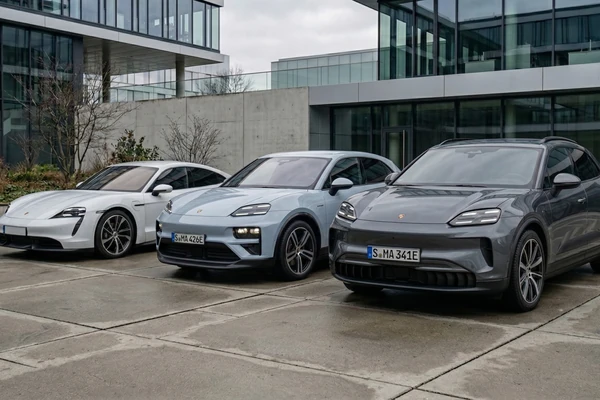
The result is an Active Sound Design that sounds different from BMW's soundscapes not because it is better or worse, but because it answers a different question. BMW asks: what sound can make driving this car emotionally richer? Porsche asks: what sound does this car have that deserves to be heard? The tension between the two answers defines the most interesting debate in EV sound design: artistic enrichment or authentic amplification?
The distinction, told honestly, is part philosophical and part communicative. A combustion sports car has its exhaust sound acoustically designed by engineers who have made aesthetic decisions about which frequencies to amplify. Porsche does exactly the same with an electric motor. That it frames it as "amplifying what already exists" and BMW frames it as "musical composition" says more about each one's brand values than about a fundamental technical difference.
The debate reformulates what psychoacoustics calls sonic skeuomorphism: the tendency of the digital to imitate the sound of the analog it replaces, so the brain accepts it with less resistance. It is what the artificial click of a phone camera does, or the simulated power-on sound of a modern television. Porsche navigates that territory consciously: it amplifies the real electric motor without pretending it is another engine. BMW decides to pose the question differently: if the EV owes no sonic debt to the combustion engine, why should it sound even remotely similar? Zimmer imitated nothing: he built from scratch.
The pedestrian signal: from obligation to opportunity
UNECE Regulation R138 leaves no room: all new electric and hybrid vehicles must emit an audible sound at speeds of up to 20 km/h and always in reverse. The minimum level is 56 dB(A), the maximum 75 dB(A) two meters from the front, and the sound must vary in frequency by at least 0.8% per kilometer per hour so the pedestrian can perceive the vehicle's speed. Mandatory for all new models since July 2019; for all registrations since July 2021.

The goal is safety: people with visual impairment —and any distracted pedestrian— need to hear a vehicle approaching that makes no mechanical noise. The AVAS (Acoustic Vehicle Alerting System) was born as a road-safety obligation. What has been most interesting is what the brands have done with that obligation.
Jaguar took four years to develop the I-Pace's AVAS. The first concept was discarded: a sound inspired by science-fiction spaceships that in urban tests made pedestrians look up at the sky instead of at the road. The final solution is inaudible from inside the vehicle —emitted by a speaker behind the front grille—, increases in pitch and volume with speed, and adds a distinguishing tone in reverse. Tested in an anechoic chamber and in real urban environments. The I-Pace was the first production electric Jaguar, and its AVAS was treated with the same engineering seriousness as any other system in the vehicle.
Nissan was more explicit about brand intent. The Leaf's AVAS has an official name: "Canto". Developed in Japan and adapted for Europe at the Nissan Technical Centre Europe, it varies in tone and pitch according to the vehicle's state —acceleration, deceleration, reverse— and is active up to 30 km/h, ten more than the regulation requires. Nissan's stated goal is that the pedestrian who hears it thinks "there goes an electric Nissan": the AVAS as a brand sonic signature, not just a safety signal.
Renault got here before anyone else: the "ZE Voice" system of the first Zoe dates from 2012, seven years before regulation required it. Since 2023, all its E-Tech models carry the exterior sound designed with Jarre and IRCAM, active below 30 km/h.
Tesla represents the opposite extreme of this scale. Its philosophy is minimum regulatory compliance: it implements the AVAS where the law requires it, with a functional sound and no pretension of brand identity. In a market where BMW, Jaguar, Nissan and Renault have turned the AVAS into a moment of sonic communication with the outside world, Tesla has decided that is not a territory it wants to invest in. It is as deliberate a choice as everyone else's.
The AVAS has ceased to be an anonymous safety system and become the first sonic impression a pedestrian has of a brand. What sounds in the street before you see the car is already a design decision.
The next wave: when the driver is the musician
The work of Zimmer, Jarre and the Mercedes and Porsche teams has one premise in common: sound is something the brand designs and the driver receives. The next generation of projects is questioning that premise.
At the 2024 CES in Las Vegas, will.i.am and Mercedes-AMG presented MBUX Sound Drive: a system that does not design a soundscape for the driver to hear, but rather uses the driving sensors —acceleration, braking, steering, energy recuperation— to generate music in real time. The car becomes an instrument. The score is written by the way you drive. A sharp brake produces a percussive accent; a slow curve generates a smooth harmonic transition. The goal of will.i.am, who came to the project from his work as a music producer, was to create what he describes as "a non-linear concert experience": every trip is different because every driver is different.
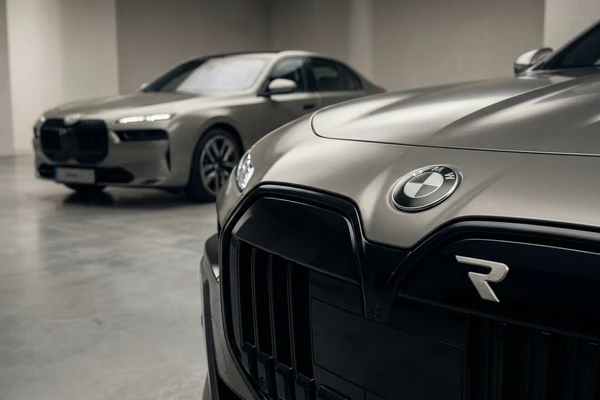
The project is available on Mercedes-AMG models with MBUX, with the intention of becoming an open platform where other artists can create their own audio formats for that system.

Yuri Suzuki takes the idea a step further. A Japanese-British sound designer and electronic musician, a partner at the consultancy Pentagram and a collaborator with artists such as Jeff Mills —the Detroit techno pioneer— and will.i.am, Suzuki developed in 2021 a research project on adaptive soundscapes for electric vehicles that uses artificial intelligence to generate sounds that change according to the time of day, the vehicle's location and the type of trip. The car does not play the same soundtrack on the way to the gym at seven in the morning as on the way to dinner at night. The sound responds not only to how you drive: it responds to who is driving, and when.
"We wanted to move away from the monotonous, annoying sounds we are used to in cars", Suzuki explained when presenting the project. "Variable sound allows the driver a more positive driving experience, and makes every trip feel important."
These projects are not yet the industry norm, but they mark the direction of the debate. In little more than a decade, EV sound has traveled the road from regulatory compliance to musical composition, and it is beginning to explore new territory: sound as an interface between driver and machine, not just as brand identity.
There is a question the sector's enthusiasm prefers not to ask too loudly: if every manufacturer designs its own soundscape with the same seriousness with which it designs the bodywork, and thousands of those vehicles circulate through the same streets, what urban soundscape are we building? One of the EV's implicit promises was quieter cities. Sound design as a brand credential puts noise back into the equation —curated, signed and well-intentioned, but noise.
Sound as a dimension of design
The combustion engine had spent a century defining how a car sounds. When it disappeared, brands found themselves facing a decision that had not existed before: with what do you fill that silence?
The answers have been revealing. BMW called the composer of Interstellar. Renault negotiated a six-year alliance with the pioneer of Oxygène. Mercedes built a lab and designed soundscapes based on field recordings of pristine ecosystems. Porsche sent its engineers to an Italian circuit for three weeks to find the right harmonics in the electric drivetrain. Jaguar took four years to design a street sound that would be heard well but not distract the pedestrian.
None of these brands has treated sound as an incidental detail. They have treated it as a dimension of product design, as deliberate as the shape of the bodywork or the material of the dashboard. Although it would be naive to ignore that part of the motivation is also competitive differentiation, brand building and, in the case of the AVAS, simple regulatory compliance. Not all of it is conscious aesthetic evolution: part of it is marketing that has found a new territory in which to compete. Both things can be true at the same time.
Philip Glass crossed America on a BMW in 1959 without knowing that, decades later, the brand that made that motorcycle would hire the composer who owes the most to his work to design the sound of its electric cars. The circle is too perfect to be accidental. Or perhaps it simply confirms that some intuitions about sound and machines are solid enough to survive sixty years.